News Center
-
About Us
-
Product Center
-
News Information
-
Contact Us
-
简体中文

MENU

News Center
When it comes to "the silk dividend", fast fashion is an area that cannot be circumvented.
In the fast fashion “Troika” (Uniqlo, ZARA, H&M), Uniqlo is the most typical success case, which is worthy of in-depth study and research by domestic apparel brands.
Recently, Uniqlo's parent company, Fast Retailing Group, released its 2016 fiscal year annual report. According to the annual report, Fast Retailing Group's total revenue in the previous fiscal year reached 1.79 trillion yen (about 107.8 billion yuan), up 6.2% over the same period last year. Among them, Uniqlo's Japanese market growth rate is only 2.5%, and Uniqlo's overseas market growth rate is 8.6%. As the largest overseas market in China, China opened 72 new stores in 2016, and the total number of stores in China exceeded 500.
In addition to offline stores, Uniqlo has also seized the fast-growing e-commerce channel. For several consecutive years, it has ranked first in apparel brand sales in the “Double 11” promotion.
So, how can this company, which is the most selling clothes in Asia, succeed in the Chinese market? Next, Xiaobian will briefly analyze the success of Uniqlo from the perspective of the supply chain.
Model innovation wins the market
From the perspective of operation mode, Uniqlo's supply chain management adopts the SPA private brand clothing franchise store model, which directly connects production and sales, eliminates the role of supply chain intermediary, and directly faces the business model of suppliers and customers. The UNIQLO SPA model has achieved “moving into supply chain management”. In other words, it has achieved refined management from planning to production, logistics and sales processes, and real-time control of the market. The specific application of the model is as follows:
1. Purchasing stage: global procurement, customized research and development. Uniqlo attaches great importance to the importance of raw materials in product development and sales, and believes that raw materials with stable supply are the basis for continuous development of production. In terms of material decision-making, Uniqlo will involve many departments.
For example, the relevant leaders of the design team, the MD team, the marketing team, and the materials team will gather to discuss and finally decide by the president. It is reported that Uniqlo holds a meeting on materials and product development every year. By summarizing the information of various countries, it can accurately predict the market and then make a decision on whether to produce. In terms of product development, Uniqlo has established a long-term strategic partnership with Toray Co., Ltd., and through cooperation, successfully developed a material called “Heattech”. The material has excellent heat and warmth and is very thin and light. Uniqlo has exclusive rights to sell this material, which makes Uniqlo very competitive.
Uniqlo also attaches great importance to the procurement of materials. Not only the quality of raw materials, but also the stability of raw materials. To this end, Uniqlo sends expert teams each year to the acquisition of raw materials between Inner Mongolia and Nepal.
In addition, in order to ensure the stability of the supply, Uniqlo will sign contracts with suppliers two or three years in advance, which not only guarantees a stable supply of goods, but also saves operating costs and responds to rising costs caused by changes in market demand.
2. Production stage: outsourcing and cost saving. Uniqlo's production planning for the products is strictly in accordance with the company's business slogan "quality and cheap", giving priority to customer preferences in product planning, to ensure that the products produced can be marketable.
In the product design stage, not only the fashion style of the product is designed, but the production department also calculates the production cost of each product to ensure that it can sell better sales at a reasonable price in the later sales stage. If the production cost of the product is appropriate, the product enters the production stage for production; if the product cost is too high, the company will first consider reducing the cost and then consider whether to enter the production.
The production of Uniqlo is basically outsourced, and the production base is built in countries with low productivity and low prices. Currently, Uniqlo is expanding its production base to Asian countries to save labor and transportation costs.
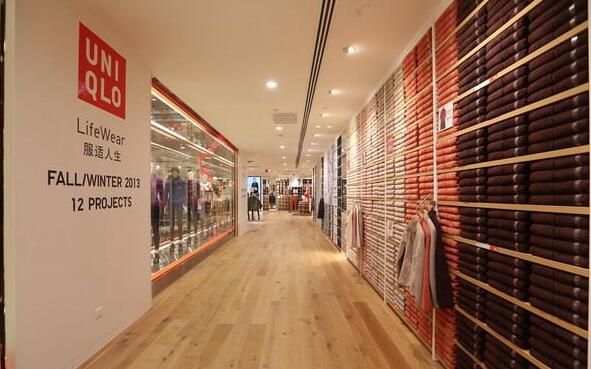
3, sales stage: direct sales, reduce inventory. Uniqlo's stores use clothing supermarket operations, which greatly improve the purchasing efficiency of customers, and Uniqlo also targets consumers to 10-30 years old. This easy and convenient operation is popular among consumers.
Uniqlo strictly clarifies the responsibilities of various departments of the company. The company has professional inventory management departments in different sales countries. The department monitors the sales situation and inventory situation in the country in real time, and determines the delivery quantity and delivery method for the out-of-stock sales stores. At the same time, the various inventory management departments should also promptly report sales to the headquarters and strengthen the control of the headquarters to each branch.
Each sales shop only needs to concentrate on its own sales. The company implements sales management, inventory management, target and performance management according to the inventory unit every day and every week, and comprehensively manages the sales profits of the products to establish a kind of A balanced structure between the normal sales price of the product and the discounted sales price.
Operational optimization results
From the perspective of market performance, Uniqlo's supply chain management mainly presents the following four characteristics:
1. Directly grasp consumer information, unique and novel product planning. Uniqlo has a powerful information collection system that not only integrates information on the development trend of fashion trends, but also responds quickly to customer needs.
It is reported that Uniqlo has world-class fashion designers who pay close attention to fashion shows and celebrities in the world to get inspiration. From the design style, Uniqlo's clothes are simple and versatile, so they have the broadest customer base. In addition, Uniqlo also pays special attention to the opinions from customers, and can design products that customers need according to customer feedback or requirements.
By using an excellent information system, this information can be conveyed to the design headquarters as quickly as possible, and the designer's analysis and refinement can be used to design the clothing that the market needs, and the process can be said to be precise and fast.
2. Simplify the supply chain and greatly reduce logistics costs and time. Undoubtedly, the secret of Uniqlo's cheap operation lies in the perfect "self-produced and sold" system. It is reported that Uniqlo is planning in the company and ensuring the supply of raw materials in advance. On this basis, it will issue product orders to its own factories.
In this way, it is possible to avoid the need for multiple middlemen from the factory to the consumer, thereby simplifying the supply chain, greatly reducing the cost of the product, and reducing the circulation between the middlemen, thereby speeding up the entry of goods into the market. . China's cost competitiveness is unparalleled. Fast Retailing commissioned the processing of approximately UNIQLO products, 90% of which were produced in China. Uniqlo also made full use of this cost advantage to achieve today's success. It can be said that the real source of cheapness is to omit the intermediate link from production to sales and implement non-return sales.
3. ECR mode to minimize the risk of demand forecasting. The flattening of channels is a basic skill that must be possessed by large-scale enterprises, both for local Chinese companies and for multinational companies. Unlike the traditional clothing industry, Uniqlo's circulation management uses a QR (quick response) system, which focuses on shortening the delivery lead time, eliminating the impact of out-of-stocks and responding quickly to customer needs.
It is reported that Uniqlo uses the ECR (Effective Consumer Response) system commonly used in the food industry. This system focuses on establishing a consumer-oriented retail model, which is focused on efficiently meeting the needs of consumers and improving the efficiency of the supply chain and demand chain. .
In addition, Uniqlo's inherent low-grade, high inventory turnover and low-margin business model, after combining the ECR system, directly analyzes retail store real-time data, clears unsalable goods, quickly replenishes vacant goods, and assesses potential effective consumer demand. Factory order. Through the control of the ordering of the order, the factory has a large number of orders depending on the Uniqku store, so that it can better play the right of order decentralization and realize the regulation and conversion between factory supply and market demand.
Under the ECR system, Uniqlo not only can meet the consumer demand to the greatest extent, but also can flexibly respond to additional orders, improve turnover efficiency, and achieve benign inventory, so as to achieve the expected effect of controlling costs.
4. Pay attention to supplier selection and maintenance and establish strategic partnerships. In order to build its core competitiveness, Uniqlo has put forward higher requirements for the design, manufacture and distribution of clothing brands.
Uniqlo generally designates one factory to produce one or a few categories, and cooperates with 70 factories throughout Asia to form a good order and process management method to further share supply chain costs such as procurement, production and logistics. Achieve long-term, strategic cooperation and form a community of destiny.
In this long-term bundled close cooperation mode, when the manufacturer performs mass production, the quality of the product is also well protected. In order to better manage the producers, Uniqlo employs expatriate technical craftsmen to send technical workers and craftsmen who are engaged in product development and financial management to the cooperative enterprises. They are stationed in the factory to produce the first line and teach the factory from fiber, weaving, textile, This complete set of plant management skills, from dyeing and sewing to finished product supply.
With the participation of technical craftsmen, the cooperative factory will adopt the same production process and production method as Japan, which can greatly improve the quality of the factory and effectively realize the management and control of product quality. In short, Uniqlo has achieved its leading position in the global apparel retail industry through efficient supply chain management, tapping into unique core competencies, and innovating new operational forms.
Uniqlo is the world's largest warehouse-style clothing retailer Uniqlo is the core brand of Japan's Fast Retailing Group. It is a warehouse-style retail apparel company that sells casual wear and work suits. It uses supermarket-style self-service shopping. In Japan, the market is occupied by low prices and high quality; in China, it is sold at the same price as Japan or higher than Japan, and the products are mainly aimed at consumers above office workers.
Uniqlo was the first to launch an online shopping business in China's branded apparel retail industry. Its online flagship store opened on April 16, 2008, and sold an average of 2,000 pieces per day after opening a store. At present, Uniqlo has been deployed in important cities in the Mainland such as Wuhan, Beijing, Tianjin, Shijiazhuang, Hangzhou, Shanghai, Nanjing, Chongqing, Chengdu, Guangzhou, Qingdao, Shenyang, Changchun, Dalian, Jinan, Xi'an, Harbin, Mianyang and Qiqihar. Moreover, the number of stores in Uniqlo continues to expand.
Source: 36氪


