News Center
-
About Us
-
Product Center
-
News Information
-
Contact Us
-
简体中文

MENU

News Center
The origin of the CUHK cloth market can be traced back to the end of the 1980s. At that time, the "walking ghosts" selling wool at the bottom of the Haiyin Bridge spontaneously moved to the opposite side of the south gate of Sun Yat-sen University, gradually forming a climate. Because it is located near the campus of Sun Yat-Sen University, the goods bought and sold are mainly cloth, which has been called the Zhongda Cloth Market by the residents of the surrounding residents over time. Its growth and development has gone through five stages:(1) From 1988 to 1996: The stalls have spent the most difficult time.

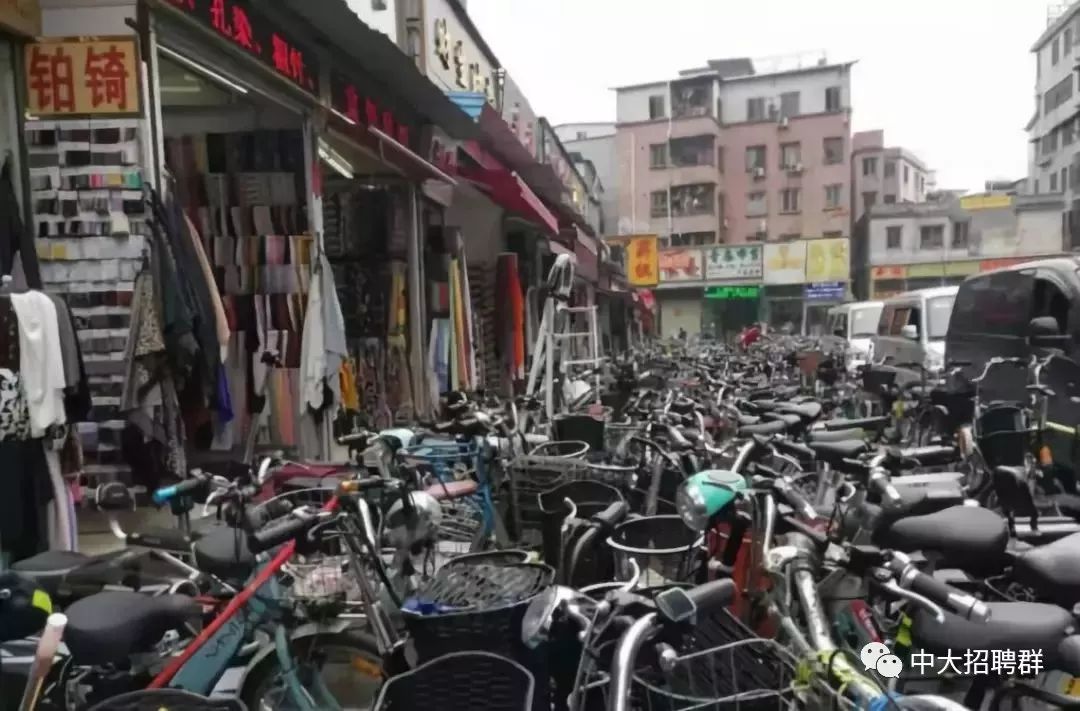
In 1987, the Guangzhou Municipal Government completely reorganized the appearance and environment. No stalls were allowed at the bottom of the Haiyin Bridge. Dozens of households had to relocate. At that time, some people suggested moving to Jiangnan West Road and some people suggested to go to the vicinity of Zhongda University. It was a suburb at the time, so everyone decided to move near the CUHK campus. It's deserted here, surrounded by mountains and fishing ponds. There are not many people in the past and business is deserted. By the early 1990s, business had improved, and northern merchants began to buy wool here, and the purchase volume has increased year by year. The business environment has also been moved from the stalls to the iron sheds on both sides of Ruikang Road. There is also an iron bed. Shelves, each booth charges 100 yuan for industry and commerce. Although the business is okay, it is hard work.
(2) From 1996 to 2001: after entering the room, they faced "internal concerns and external problems".
Due to the dense market stalls in the early stage of development, and the planning was very irregular, fire hazards were serious. In May 1996, the Haizhu District Government began to renovate and rebuild the CUDA market and made it clear that only the reconstruction and reconstruction of the market is the fundamental way out. The government changed the original street stalls, iron sheds, etc. of the city into simple brick shops with a brick structure. At that time, Zhongdabu City was facing "internal and external problems." On the one hand, the city management is chaotic. The roads on the site are narrow, people and vehicles are mixed, traffic conditions are poor, and they are intertwined with the villages in the city. The public order problem is prominent and theft is rampant. On the other hand, the cloth city was challenged by various parties. The Tianxiong Textile City, located in the south of Guangzhou Avenue, was just opened and opened, and the government required all merchants to move there. At the same time, Zhejiang's textile and apparel exports have been increasing year by year, and the gap between Guangdong and Zhejiang is still expanding.
When the external competitors made great efforts to catch up, the medium and large-sized cloth market in the early years, which spontaneously grew through the private sector and mainly consisted of temporary buildings, gradually showed fatigue. This situation did not improve until 2001.
(3) From 200l to 2004: The situation of rapid expansion of business districts is gradually clear.
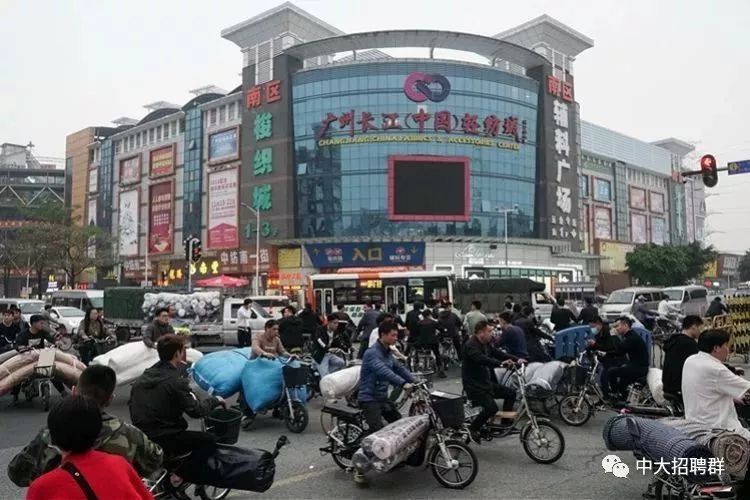
In 2001, the Chinese cloth market entered a booming period. During this period, the Haizhu District government achieved practical results in the upgrade and transformation of the cloth market. While initially addressing the traffic and fire hazards, it also removed the hat of "Guangzhou Top Ten Fire Hazards". The Guangzhou Municipal Government has issued the "Guangzhou Commercial Outlets Development Plan (2003-2010)", and the Haizhu District Government has also prepared the "Zhongda Cloth Market Remediation Planning Plan", which puts the textile business district of Zhongda in the top priority of upgrading. In 2004, the Haizhu District Government formally handed over the management of the city to Fengyang Sub-district Office, and established more than ten functional departments including the district government office, public security, industry and commerce, taxation, urban management, public security, planning, transportation, and environmental sanitation. "Zhongda Cloth Market Management Committee". Starting at this time, the operating environment is relatively stable, showing a trend of taking Ruikang Road as the axis and developing towards the surrounding Dongxiao South Road.
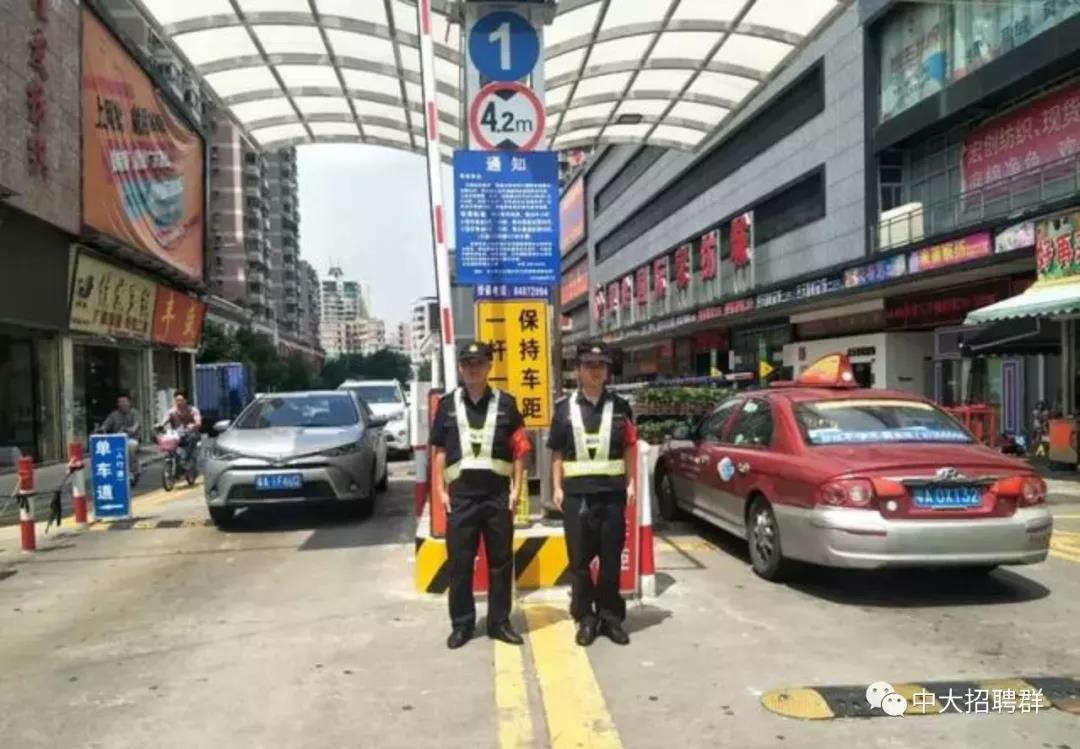
(4) From 2004 to 2009: "Global Trading Center" surfaced.
From January 1, 2005, with the termination of China's Export Trade Textiles and Clothing Agreement, textile and clothing quotas have been cancelled. The advent of the post-quota era means that enterprises, whether state-owned or private, regardless of size, have the right to export foreign trade, and Guangzhou's textile industry has enjoyed unprecedented opportunities for development.
Aiming at the problems caused by the rapid expansion of the market in terms of transportation, fire protection, and public security, the Haizhu District Party Committee and District Government are determined to take strong measures to promote market upgrading in planning, renovation, management, service and infrastructure construction. Guangzhou International Textile City has risen rapidly in this good time and geographical opportunity, bringing more business opportunities and prosperity to the surrounding shops, and becoming the flagship of Zhongda Textile Business.
(5) "2009 China Textile Headquarters Economic Zone" has been gradually established since 2009
Although the development of the city's cloth industry has been hindered by the financial crisis, the adjustment of the operating structure has greatly shortened the recovery period of the market. Coupled with the further expansion of domestic demand, the cloth market transactions have shown benign development. The headquarters strategy also puts forward higher requirements for the current conditions of the city, so the emergence of the headquarters economic zone is the future development direction of Zhongda City. With the official opening of the Guangzhou Yangtze River (China) Textile City, the conditions for the formation of the "China Textile Headquarters Economic Zone" have gradually matured. Positioned as the "China Textile Headquarters Economic Zone", the Guangzhou Yangtze River (China) Textile City doubled the capacity of the Zhongda Textile Business District with an ultra-large scale of 400,000 square meters. It is a collection of procurement transactions, international commerce, modern One-stop procurement and trading center for fabrics and accessories with comprehensive supporting functions such as logistics, exhibitions, information consulting, technical exchanges, and talent training. Its advanced design and planning are 20 years ahead of similar domestic markets. Together with the "Pearl River Textile City" which will open next year, the scale of Zhongdabu City will be close to that of Zhejiang Keqiao Textile Circle, and there will be a real Chinese textile industry pattern of "North Keqiao and Nanzhong University" that is truly Equal..
2. Management thinking of "Zhongda Cloth Business District"
The Zhongda Cloth Business District develops around Ruikang Road to the south, extends to both sides of Yijing Road, and radiates to the south of Guangzhou Avenue. At present, dozens of cloth markets have been gathered in the Zhongda cloth business district, and the distribution is as follows:
1. The largest number of cloth cities to which the Yangtze River belongs (including the Yangtze River Garment Accessories Square, the Yangtze River Textile City, the Yangtze River Cloth Trading City, the Yangtze River Ruikang Ingredient City, the Guangzhou Yangtze River (China) Textile City, and the Yangtze River Wide Accessories City) have already occupied 60% of the big business district, of which Guangzhou Yangtze River (China) Textile City (also known as "China Textile Headquarters Economic Zone") has an area of more than 400,000 square meters.
2. Guangzhou International Textile City ranked second in terms of market share under the name of "Global Textile Trading Center". Sports market.
3. CUHK Kyushu Textile City, which is dominated by "fabric transactions," ranks third in terms of market share.
4. The rest of the market consists of sporadic shops such as Zhongda Ruifang Textile City.
5. The volume of the Pearl River Textile City, which will open next year, is relatively large among all medium and large cloth markets, and is not included in the rankings due to incomplete construction.

At present, when looking at the entire "Zhongda Cloth Business District", they have the following characteristics:
1. Large transaction volume and high popularity. The annual transaction volume of the Zhongda Business District has exceeded 50 billion yuan, and in the continuous rise, the radiation of the transaction is no longer confined to South China, covering the entire China, and even partially covering the global market. There are tens of thousands of cars and hundreds of thousands of people in and out of Zhongdabu City every day. Traffic jams start at 11am every day, and it is not smooth until 8 or 9pm.
2. It has a complete range of products, and the world's largest accessories trade. Zhongdabu City covers all categories of textile industry, including knitted fabrics, chemical fiber fabrics, woolen fabrics, silk fabrics, blended fabrics, cotton fabrics, linen fabrics, clothing fabrics, home decoration fabrics, buttons There are nearly 100,000 varieties such as buckles, irons, and hardware. Among them, accessories transactions account for the largest share of global transactions.
3. The operating area is not obvious. Although Zhongdabu City has a large transaction volume, due to the spontaneous adjustment of the market, there is a phenomenon of overlapping product divisions in the market's operating divisions. As a result, buyers cannot conduct special procurement in the exclusive area and have to find the required products throughout the market. , Increasing the time cost of the purchase transaction.
4. Vehicle transportation facilities are seriously lagging behind. It takes one hour to get in and out of the entire commercial area at 500 meters. The peak period is even longer, which seriously affects the flow of people and vehicles, and has a huge damaging effect on the business environment.
5. The logistics market planning is backward. Due to the spontaneous growth of the market, many supporting logistics do not exist at all, resulting in serious defects in the transportation of goods and the lack of logistics platforms, which has reduced the speed of commodity transactions.
6. The old market and the new market coexist. The old and new markets in the CU Cloth business district continue to operate, and the new market is rising rapidly. As a result, the new and old markets are operating simultaneously. The old market is mainly concentrated on both sides of Ruikang Road. The core extends east to the south of Guangzhou Avenue, where the two super light cities of Guangzhou Yangtze River (China) Textile City and Pearl River Textile City are concentrated.
7. Merchants' business requirements for supporting facilities continue to increase. Because the old market could not meet the needs of merchants to generate more supporting facilities due to business expansion, many merchants took the initiative to relocate or set up headquarters in new markets.
8. Lack of e-commerce transactions. Due to the lack of classification standards for light textile products, especially fabric accessories, the product description is not standardized, and the transactions must be based on physical signing transactions. Therefore, it is impossible to use the Internet platform to conduct transactions in a true sense, resulting in the application of e-commerce platforms. popular.
Generally speaking, the Zhongda Cloth Business District is a mature business district with deep foundations. However, due to the limitations of operating hardware, its development must go beyond the limits or re-plan for better development. Reconstruction, on the basis of making full use of old resources, enhances the modern business environment of the entire business circle, and truly establishes the branding of CUHK and the title of headquarters economic zone.
Thoughts on the Future Upgrade of the "Zhongda Cloth Business District"
According to the current actual situation of CUHK, major adjustments cannot be achieved in the short term. Only through manual intervention in the functional layout of the market can the gradual adjustment of the overall business planning of CUDA, scientific planning of the new market, and movement of some functions of the old market outside Based on this, through logistics and warehousing peripheral facilities, an e-commerce platform is used to achieve the functional divisional operation of the entire Zhongdabu city. Therefore, for the future upgrade of Zhongdabu City, the development of Zhongdabu City can be planned in accordance with the principles of functional divisions such as trading, display, warehousing, logistics, commerce, and headquarters, as follows:
1. The trading area of Zhongdabu City is dominated by the old market. All the warehouses in the old market are moved outside. The small shops are opened and transformed into large shops. The purpose is to transfer the warehouses to avoid fire risks and reduce traffic pressure. It also increased the operating area; the larger berths can improve the operating environment and facilitate purchaser transactions. Such markets are the old markets such as the Yangtze River Garment Accessories Market, Ruikang, Ruifang, Zhongda District B, and Wide Market.
2. The exhibition area of Zhongdabu City is dominated by the newly built market. The internal structure and supporting facilities of the building can completely create a never-ending exhibition area. With the exhibition and trade, it tends to be an international trade exhibition. The main merchants, through the high-end influence to drive the low-end transactions in the old market. Such markets include new markets such as Guangzhou International Textile City and Kyushu Textile Plaza.
3. The headquarters and business area of Zhongdabu City are mainly based on new peripheral markets. Its planning includes business, office, leisure, e-commerce, hotels, restaurants and other functions. Through complete supporting facilities, it attracts domestic and foreign big brands to set up The headquarters, which exerts its headquarters functions such as R & D, design, marketing, and information, has become a veritable economic zone of China Textile Industry, making Zhongdabu City an economy covering R & D and marketing. Such markets include new peripheral markets such as Guangzhou Changjiang (China) Textile City.
4. The logistics and warehousing area of Zhongdabu City is dominated by supporting facilities in new peripheral markets. Its convenient transportation and spacious space are favorable conditions for logistics and warehousing. This functional zone can undertake all logistics transportation in Zhongdabu City. It can also solve the problem of traffic congestion in Zhongdabu City. This type of market is dominated by large supporting logistics facilities in Guangzhou Yangtze River (China) Textile City.
5. The establishment of the CUHK e-commerce platform, through which the trading area and the exhibition and trading area are dealt with in and out of all the goods that need to be tracked in the warehousing and logistics area. The construction of the platform has been implemented in Guangzhou Yangtze River (China) Textile City.
The above idea is a reference idea for solving the overall development of CUHK, and it does not require too much engineering transformation. It is an ideal method of low investment. The current problem is that the markets are not uniformly owned, which makes the markets have interests. This requires the market operators to negotiate and adjust together under the auspices of the government.
The development of Zhongdabu City needs to be re-planned and adjusted so that it can truly catch up with Keqiao Textile Circle and even surpass it.
Postscript
The managers of the major markets of the "Zhongda Cloth Business District" have begun to attach importance to the overall development of the business district. This is good news for the "Zhongda Cloth Business District". With a temporary small sacrifice in exchange for a long-term big return, the road to the upgrade of Zhongdabu City can proceed smoothly.